trick mirror: reflections on self-delusion - jia tolentino
★2/5BOOKS
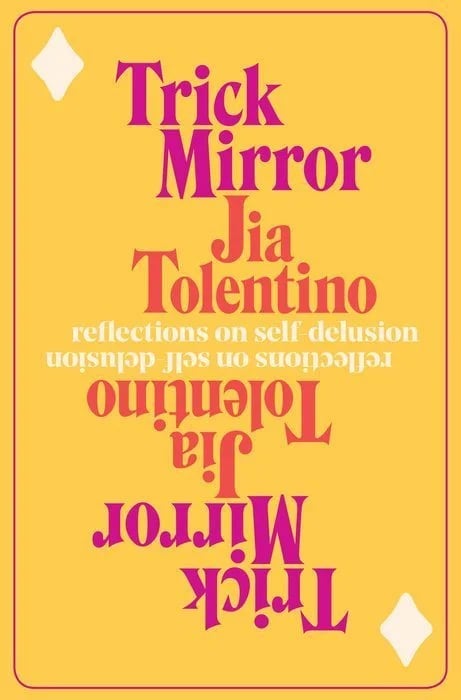
published by random house (2019)
"in the end, the safest conclusions may not actually be conclusions. we are asked to understand our lives under such impossibly convoluted conditions. i have always accommodated everything i wish i were opposed to. here, as in so many other things, the ‘thee’ that i dread may have been the ‘I’ all along.”
I had to truly force myself to finish this book as the chapters dragged on, but GOD am I glad I did because that very last paragraph truly sums up the book in its entirety. I resent this book so incredibly because of the layers of ironic self-unawareness that exist within it; the author Jia Tolentino writes on topics that she seems uniquely UNqualified to speak on, and in doing so writes essays so uncertain and elementary that it makes the reader wonder what the point of writing this in the first place was. It is incredibly difficult to read and trust a writer who is an ex-cheerleader, popular girl, yoga and pure barre enthusiast, generically beautiful, and in a functional and well-adjusted heterosexual relationship. The topics she brings up are heavy with trauma and hardship about the female experience from a hard feminist standpoint, but her points either come from elementary definitions of standpoints that, are important, but are fairly obvious. OR they come from a personal anecdote that only marginally helps support her point. It is hard to feel trust when, for example, her supporting evidence when discussing the effect of the sexual assault-infested underbelly of her alma mater is simply that she was there and heard about it happening through secondary sources.
I want to preface before saying this hot take that my perspective comes from a trans-masc, queer person of POC experience having lived as a girl/woman for 22 years, but I felt that this woman mansplained feminism to me (yikes!). I do not know WHO this book is for, because if the intention is to inform an audience who may not have known the content beforehand, it definitely wasn’t delivered in a way that audience would find interesting, engaging or informative. It assumes a reader understands certain terms and references while spending a pageworth explaining fairly basic ones. I truly believe this book could’ve been HALF THE LENGTH if she had simply removed the over-explaining of general concepts and the millions of examples reiterating the same point over and over (the chapter Pure Heroines was especially painful for me).
Lastly, I will say that the only chapter I was remotely engaged with was her essay on personal recreational drug-use titled Ecstasy. I can definitively say that this was the only topic she used her personal experiences and anecdotes to support her point, one that was not generic or over-explained. To compare drug-use to a connection to God backed by her religious upbringing and her subsequent trips was EXACTLY the kind of writing I wish the rest of the book had. For this chapter alone I award this book 2 stars.
Related Stories
CyberSoprano™ © 2026
cybersoprano speaks is a creator-curator website where i express my opinions as my own, and create communal digital space to interact with various media together. the comments are heavily moderated, but cybersoprano cannot be held legally liable for content posted by other users. users take legal responsibility for any and all content they've uploaded. harmful or abusive content is STRICTLY prohibited, and can lead to permanent removal of the website. let's play nice, ok?
if you want to stay up to date with new content, the newsletter is the best way to keep up with posts as they go live.
subscribe to the newsletter to keep up the shenanigans!